

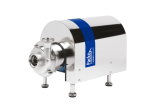

Centrifugal Pump
Discover the capabilities of a centrifugal pump and
how it can be the right solution for your application.
Description
Centrifugal Pump
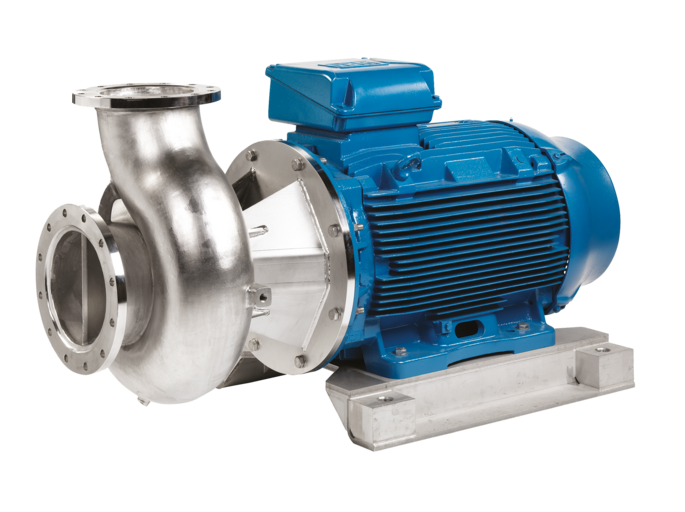
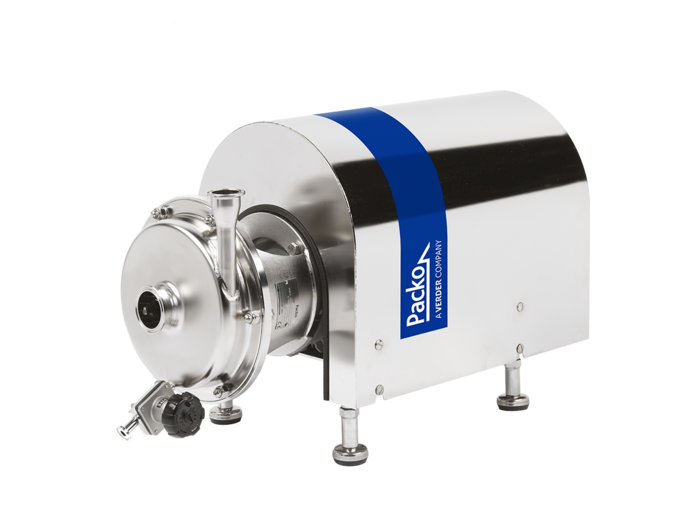
Our range of Packo centrifugal pumps are known for their outstanding craftsmanship and technological innovation. Made from stainless steel, they are suitable for a range of applications ranging from industrial, hygienic, to pharmaceutical and more. Below you will find everything about a centrifugal pump, its working principle, benefits and reasons to use and a breakdown of the applications where this type of pump excels at.
How does a Centrifugal Pump work?
A centrifugal pump works on the principle of a rotating impeller within a stationary pump housing. The impeller is connected to a shaft and powered by a motor. As the impeller turns, it moves the liquid out of the pump through centrifugal force, exiting through the discharge flange.
What is the working principle of a centrifugal pump?
A centrifugal pump operates on the principle of centrifugal force to move fluid. How does this translate to operation?
- Impeller Rotation: When the pump starts, the motor drives the impeller to rotate. The impeller has a series of curved vanes.
- Fluid Intake: Fluid enters the pump through the eye of the impeller. This area is at lower pressure compared to the rest of the system, allowing fluid to be drawn into the pump.
- Centrifugal Force: As the impeller rotates, it imparts velocity to the fluid due to centrifugal force. The fluid is pushed radially outward from the impeller eye to its periphery.
- Conversion of Energy: The kinetic energy (velocity) of the fluid is converted into potential energy (pressure) as it slows down in the volute casing or diffuser. The volute casing is a spiral-shaped channel that gradually expands in cross-sectional area, allowing the fluid to slow down and its pressure to increase.
- Discharge: The pressurized fluid is then directed towards the pump outlet or discharge port, where it exits the pump.